|
Migma News |
|
1. MigmaDSFBTM Successfully Installed in Towns and Cities 2. Excellent Bike Counting Accuracy of MigmaCountTM 3. MigmaInstallationTM Installed in City of Philadelphia 4. Migma Received SBIR Phase II from FRA
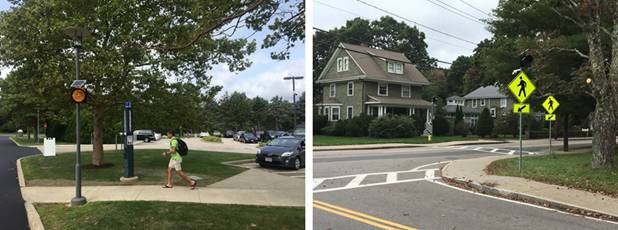
1. MigmaDSFBTM Successfully Installed in Towns and Cities The continuously flashing beacons may not necessarily attract driver�s attention because they are always on and drivers get used to them already. In addition, they flash 24/7, day and night, even when there are no vehicles or pedestrians on the streets, which might also introduce the visual noises to the residents living nearby. Migma Systems has developed an alternative product, Distributed Sensing Flashing Beacon (DSFB) Model P, where P stands for pedestrian. The sensor receiver is embedded inside the housing of flasher, drawing power from solar panel or solar battery. Using solar-powered detector, it flashes only when pedestrians who are waiting at midblock curb are detected. Otherwise, it is off! The detector and beacon flasher can be installed on different poles or posts. Please visit at http://www.migmapd.com/migmadsfb.htm.
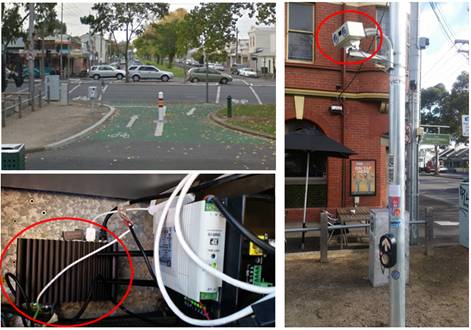
2. Excellent Bike Counting Accuracy of MigmaCountTM
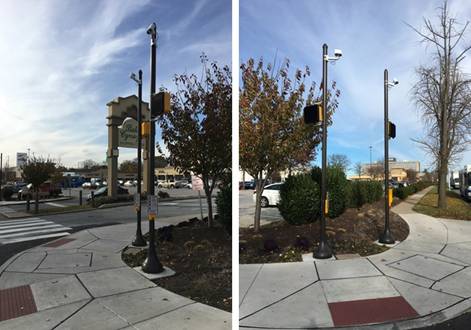
3. MigmaInstallationTM Installed in City of Philadelphia Pennsylvania DOT (PennDOT) has recently installed Migma�s passive ped detectors, MigmaIntersectionTM, at three busy intersections near downtown Philadelphia to replace the signal recalls. At these intersections, ped calls will now be automatically placed only when pedestrians and bicyclists are detected in the detection zones, which can help maximize the vehicle traffic flow. There are APS buttons installed at each intersection. When being detected, without pushing any buttons, visually-impaired pedestrians can hear the extended-push audio messages pre-programmed in APS buttons. As many pedestrians often walk across the crosswalks without pushing buttons, Migma�s passive ped detectors installed at Philadelphia can potentially improve the pedestrian/bicyclist safety at busy intersections, which is a key feature in Vision Zero. For more information, please visit http://www.migmapd.com/migmaintersection.htm.
4. Migma Received SBIR Phase II from FRA
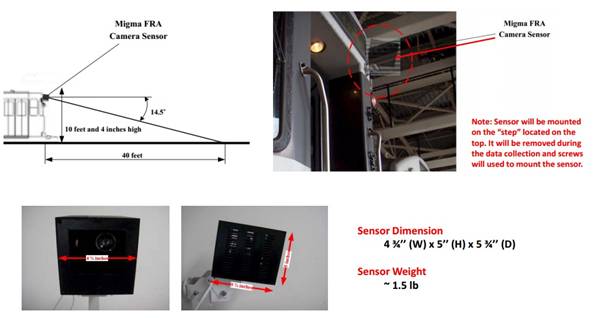
Migma has received FRA SBIR Phase II for the detection of broken rail using thermal IR camera. In Phase II, Migma will further develop new software algorithms solving some issues observed in Phase I. A smaller sensor platform will be developed for data collection on MBTA train, which incorporates a higher resolution IR camera and smaller gyro stabilizer. Using this new sensor platform, Migma will collect more data of both regular rail tracks and track cracks. Migma will then develop software algorithms for image quality improvement under various operating conditions, thermal signature variations, and discrimination between true track cracks and background clutters. In addition, Migma will work with engineers at MBTA and feedback from MBTA will be incorporated into the final commercial product.
|
|
|
 Top
Top